
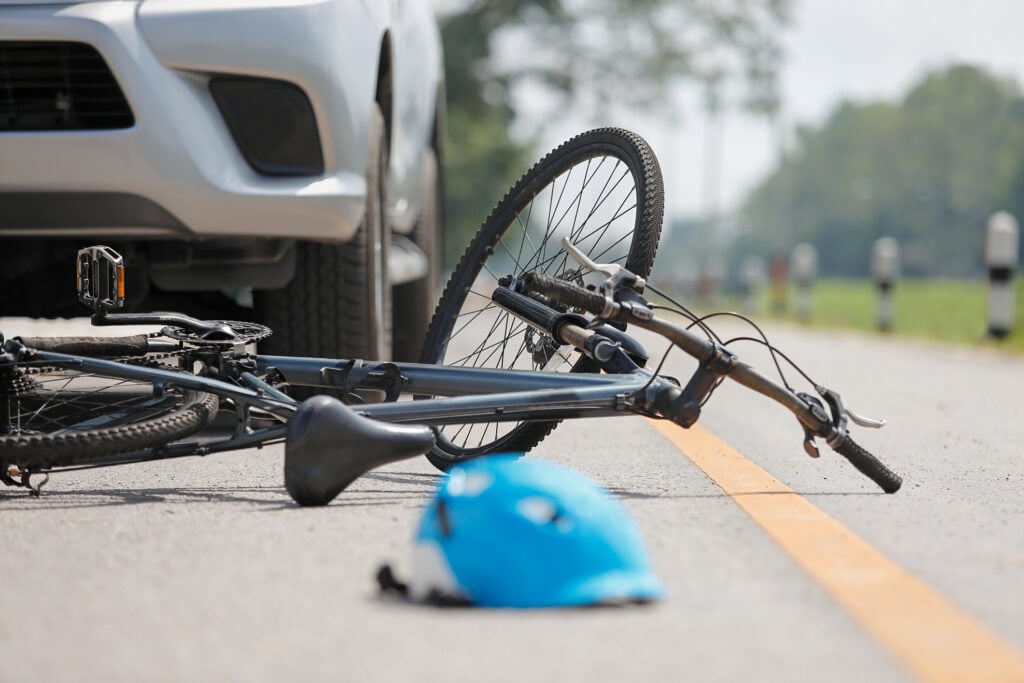
As we move deeper into May 2026, the roads across Northern Illinois are becoming increasingly crowded. With the warmer weather, we are seeing a massive influx of cyclists on the recreational trails and commuters on the city streets. At Shindler & Shindler, we celebrate this outdoor activity, but as a “family-owned” firm, we also worry about the risks. One of the most significant legal developments this year is the expansion of Scott’s Law, also known as the “Move Over” Law, which now provides even stronger protections for those on the side of the road.
At Shindler & Shindler, we believe that every resident of Rockford and the surrounding areas deserves to feel safe, whether they are in a vehicle or on a bike. When a driver fails to move over and causes an accident, it isn’t just a traffic ticket: it is a display of negligence that can change a life forever. If you have been injured, you need a bicycle accident attorney Rockford who provides direct access to Rob and Keith, ensuring that these new 2026 legal protections are used to maximize your recovery.
Understanding the 2026 Scott’s Law Expansion
For years, Scott’s Law required drivers to change lanes or slow down when approaching any vehicle with flashing emergency lights. This included police cars, ambulances, and even tow trucks. However, the 2026 update has significantly widened the scope of this protection. The law now expressly includes any “vulnerable user” at the scene of an emergency or a roadside breakdown, including pedestrians and cyclists who are stopped or assisting others.
This change is a game-changer for bicycle accidents that occur on the shoulder or near intersections. Imagine a cyclist who has stopped on the side of a busy Rockford road to fix a dropped chain or help a friend with a flat tire. Under the old rules, a driver might have argued they didn’t have a specific duty to “move over” because there were no flashing sirens. In 2026, that excuse no longer holds water.
The law now recognizes that anyone on the side of the road is in a position of extreme vulnerability. Drivers are now legally mandated to reduce speed and, if safe to do so, vacate the lane closest to the stationary person. This shift in the law makes it much easier for real lawyers to prove that a driver was negligent from the very beginning of a case. We don’t use “gimmicks” to explain away a crash; we use the law to hold the responsible party accountable.
The Step-by-Step Process: Turning a Violation into a Victory
When an accident happens, the legal process at Shindler & Shindler begins immediately. We don’t wait for the insurance company to call us; we go to work to prove that Scott’s Law was violated. This process is transparent, technical, and requires the tenacious oversight of an experienced attorney.
Step 1: Securing Local Surveillance and Dashcam Footage
The first step in our process is securing visual proof. In many Rockford cases, we subpoena footage from municipal traffic cameras or nearby business security systems. We also look for dashcam footage from the negligent driver’s vehicle or from other motorists who were in the area.
If we can show that there was ample room for the driver to move over, but they chose to stay in the lane and strike a cyclist or pedestrian, the case for negligence is virtually undeniable. Because you have direct access to Rob and Keith, this investigation happens at the partner level. We don’t leave this critical task to a case manager who might not understand the technical nuances of the new 2026 statutes.
Step 2: Utilizing Police Bodycam and Accident Reports
When the police arrive at a roadside accident in Northern Illinois, they are now trained to specifically look for Scott’s Law violations. We work closely with local law enforcement to obtain their initial assessments and bodycam footage from the scene.
If a driver was cited for a “Move Over” violation at the scene, we use that citation as “prima facie” evidence in your civil suit. This means the law assumes the driver was negligent because they broke a safety statute designed to protect people like you. This is a powerful leverage point in personal injury law negotiations, and we know exactly how to use it to push back against lowball insurance offers.
Step 3: Proving “Duty of Care” Through the 2026 Standards
The final part of the process is connecting the driver’s violation to your specific injuries. We use the 2026 standards to show that the driver breached their “duty of care.” We illustrate to the jury or the insurance adjuster that the driver had a clear legal mandate to slow down and move over, but their failure to do so led directly to your catastrophic injuries.
We explain the “why this matters” to the court. It matters because the law was created to prevent exactly the kind of tragedy you are experiencing. By framing the case through the lens of a Scott’s Law violation, we make it much harder for the defense to claim the accident was “unavoidable.” We show that it was entirely preventable if the driver had simply followed the rules of the road.
Why the “Anti-Corporate” Personal Connection Matters
In a complex case involving a Scott’s Law violation, you cannot afford to be just another number. Corporate “volume” firms often miss the technical details of these new 2026 updates because they are too focused on settling as many cases as possible. They might treat a roadside bike accident as a standard car crash, missing out on the added legal leverage that the “Move Over” law provides.
At Shindler & Shindler, we provide a different experience. We are a family-owned firm that understands the weight of a serious injury. When you call us, you talk to the partners who are actually building your case. We take a limited number of cases so that we can be tenacious in our pursuit of justice for our neighbors in Northern Illinois.
We treat our clients with empathy and candor. If we find that a driver was distracted by their phone while failing to move over, we use that information to maximize your claim for “pain and suffering.” We don’t believe in gimmicks; we believe in hard-hitting legal work that protects the “whole person” and their future.
Protecting Vulnerable Users in the 2026 Construction Season
This May, we are seeing a massive amount of roadwork across Rockford and Mundelein. These construction site accidents zones are where Scott’s Law is most frequently ignored. Drivers often get frustrated by delays and try to “squeeze through” narrow lanes, putting workers, pedestrians, and cyclists at risk.
If you are involved in an accident in or near a work zone, the 2026 Scott’s Law protections are your strongest ally. We investigate whether the construction company provided adequate “buffer zones” and whether the negligent driver ignored the specific signage requiring them to move over. We are real lawyers who know how to navigate the intersection of traffic law and construction safety regulations.
Our “DadTheLawyer” philosophy means we want you to be safe, but if you are hurt, we want you to be compensated. We are here to demystify the legal process and ensure that the “big guys” don’t push you around. Whether you were riding your bike or standing by your car, you had a right to that space on the road. We are here to defend that right.
Injured on the side of the road? Don’t let a negligent driver get away with it. Contact Shindler & Shindler today at (847)-WE-FIGHT or visit our Contact Page to speak with real lawyers who will fight for your recovery.
Key Takeaways
- 2026 Update: Scott’s Law now explicitly protects cyclists and pedestrians assisted or stopped on the side of the road.
- Legal Mandate: Drivers MUST reduce speed and vacate the lane closest to vulnerable users when safe to do so.
- Evidence is Key: We subpoena dashcam and traffic footage to prove a driver had the space to move over.
- Partner-Led: You get direct access to Rob and Keith to handle the technical details of the new 2026 statutes.
- Tenacious Advocacy: We use Scott’s Law citations as powerful leverage to fight lowball insurance settlements.
FAQs
What if there was only one lane and the driver couldn’t move over?
If a driver cannot safely change lanes, Scott’s Law still requires them to reduce their speed significantly and proceed with extreme caution. If they struck you while traveling at the normal speed limit, they have still violated the law, and we can hold them accountable for their negligence.
Does Scott’s Law apply to cyclists who are riding in the bike lane?
While Scott’s Law primarily focuses on stationary people and vehicles on the shoulder, the 2026 updates emphasize the protection of all “vulnerable users.” If a driver drifts into a bike lane and hits a cyclist, they have failed in their general duty of care, and we can often use the principles of the “Move Over” law to strengthen your case.
How do I prove a driver didn’t slow down?
We use several methods to prove a lack of deceleration, including “black box” data from the vehicle, witness testimony, and video footage. By calculating the distance between the driver’s vehicle and the scene of the accident, we can often demonstrate that they never applied their brakes until it was too late.