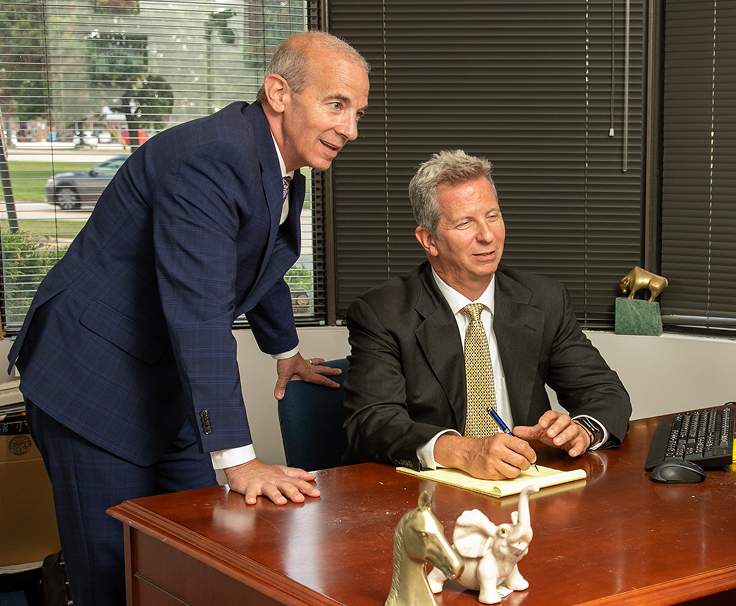
Shindler & Shindler is a family-owned personal injury law firm led by brothers Rob and Keith Shindler. With decades of combined experience, we have built a reputation for treating every client like family, communicating fast, and going to court when it counts. No gimmicks, just real lawyers who care and who win.
At Shindler & Shindler, we genuinely care about you as a person, and you are not just another case to us. We take your call, fight for your future, and deliver the results you deserve with the care you didn’t expect from a law firm.
The best kind of reputation is one you earn. Here’s what real clients have to say about working with Shindler & Shindler.
When I was injured at work, my employer did not give me anything. I hired Shindler & Shindler, and my employer’s first offer was only $500.00. This next offer was only $1,200. After Shindler & Shindler got aggressive with the employer’s insurance, I got a settlement of $100,000. Life changing. Thank you Shindler & Shindler.
Patrick K.
I was hit by another car on the way to my boyfriend’s house. The other driver’s insurance company sent me a text offering $800.00. I did a google search for a good car accident attorney and called Shindler and Shindler. It took some time. But, Keith Shindler fought hard and did not accept any offers. He got me $25,000 from the first insurance company and another $41,000 from another insurance company. I am so happy I did not accept $800!
Angel P.
I was hurt at work. I broke my back. The first lawyer I contacted told me I had no case. I was referred to Keith Shindler by a relative who used him many years before for a car accident and had a good experience. Keith accepted my case. He not only collected a lot of money from my employer, he and his team also collected $12,000,000 from the companies that were responsible for my injuries.
Carl L.
I had a car accident, but there was only little damage to my car. The other drivers insurance company sent me a text offering $1,000 if I signed a release document. A Google search listed Keith Shindler is one attorney to call. I called three attorneys and Keith was the only one answered my call right away. He helped me find a doctor and at the end of the case I got a settlement check for $15,600. Don’t accept that offer from the insurance company. Call Keith Shindler.
David J.
When I first met Robert to talk about a case, the first words to me were, “We won’t talk about money yet, let me tell you first what I can do for you.” Honestly the best lawyer I’ve come across. As a lawyer and as a person.
Brayan Estrada
Mr. Shindler’s hard work and dedication allowed me to not have so much anxiety throughout the entire court process. He is reliable, honest and trustworthy. Someone you can count on, indefinitely.
Marisol Canizales
I met Rob back in 2021 and he is an amazing person! What distinguishes him is that he treats and cares for his clients as people first, then clients. He takes the time to get to know you and connect with you as a person.
Jorge Moreno
Great experience working with Mr Shindler. Treated me more like an old friend rather than his client. Handled my case exceptionally well and eased my tension every step of the way. I would highly recommend this law firm to anyone in need.
How do I know if I have a personal injury case in northern Illinois?
If you were injured because of someone else’s negligence—whether in a car crash, slip and fall, or other accident—you may have a case. Our northern Illinois personal injury lawyers offer free consultations to walk you through your options.
How much does it cost to hire a personal injury attorney in Algonquin?
At Shindler & Shindler, there’s no upfront cost. We work on a contingency fee, meaning you pay nothing unless we win your case.
What types of cases do you handle in Algonquin and the surrounding areas?
How long do I have to file a personal injury claim in Illinois?
In most cases, the statute of limitations in Illinois is two years from the date of the injury—but the sooner you contact an experienced personal injury lawyer, the better we can protect your rights.
Will I work directly with an attorney or a case manager?
You’ll work directly with Rob or Keith Shindler—real, experienced northern Illinois personal injury lawyers. From your first call to your final result, we’re by your side.